

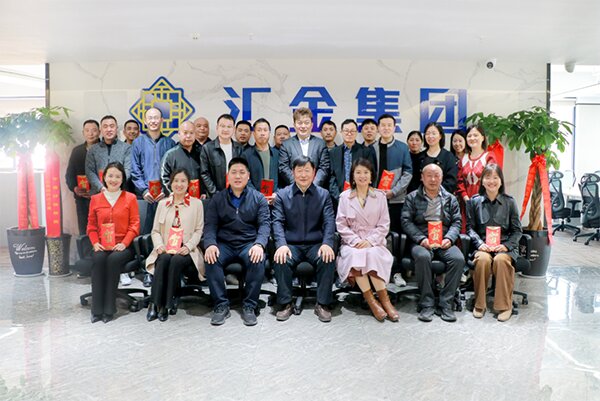
On the morning of February 21, 2023, the headquarters of Huijin Group welcomed the relocation and settled in Zhengzhou 2000 square meters 5A office building (7th floor, Zhenghongzhi Space B, Yingcai Street, Huayuan Road), and held a grand relocation ceremony. Mr. Guo Rongxun, Chairman of Huijin Group, his family, Ms. Kong Panhong, CEO and President of Huijin Group, and Huijin employees gathered at the scene to witness this important moment.
Presided over by President Kong Panhong, the celebration was divided into three parts:
First of all, Chairman Kwok Young-hoon delivered a speech. Guo Dong looked back with a lot of emotion, and reviewed the major events of the company since its establishment in 1992, expressed his sincere thanks to the friends from all walks of life and all Huijin employees who served and contributed to Huijin, explained the significance of the relocation for the company's talent introduction, and sent an affectionate message to Huijin's future development.
Subsequently, Chairman Guo Rongxun with his wife Jiang Yun cut to send blessing cake, meaning good luck, promoting to a higher position.
Finally, the "red envelope to send happiness, relocation" lucky draw, the company set up 2,000 yuan, 1,000 yuan, 500 yuan, 100 yuan and other red envelope prizes, a total amount of 30,000 yuan, Huijin staff and other enthusiastic participation, the activity to the climax.
The relocation is an important milestone in the 31-year development of Huijin Group, which has injected strong impetus for the introduction of talents and steady development of the Group while improving the company's office environment. Standing at a new starting point,
the striving Huijin people will follow the leadership of Guo Dong and the deployment of President Kong, continue to innovate, unite as one, and make unremitting efforts to achieve the company's goal of double million in 2025 and the grand blueprint of Huijin for a century!